Victoria's Daughters

CHEAP,Discount,Buy,Sale,Bestsellers,Good,For,REVIEW, Victoria's Daughters,Wholesale,Promotions,Shopping,Shipping,Victoria's Daughters,BestSelling,Off,Savings,Gifts,Cool,Hot,Top,Sellers,Overview,Specifications,Feature,on sale,Victoria's Daughters Victoria's Daughters

Victoria's Daughters Overview
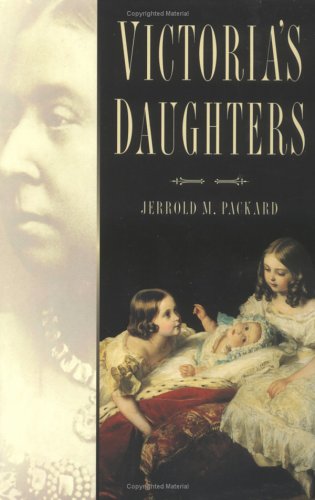
Charting the lives of Queen Victoria's five daughters, this book closely examines a generation of royal women who were dominated by their mother and married off as much for political considerations as for love. Vicky, Alice, Helena, Louise, and Beatrice would come to share many of the social restrictions and familial machinations borne by nineteenth-century women of far less-exulted class, before finally being passed over entirely with the accession of their brother Bertie to the throne. Principally researched at the houses and palaces of its five subjects in London, Scotland, Berlin, Darmstadt, and Ottawa.
Victoria's Daughters Specifications
Incisive character studies of Queen Victoria's five daughters provide the framework for a lively survey of 19th-century European history. With three brothers securing the English throne, the princesses' royal duty was to further Britain's interests through marriage. Vivacious, intelligent Vicky (1840-1901), the spoiled eldest, had a happy union with Hohenzollern prince Frederick William, though her liberal views were unpopular in Prussia and vehemently resisted by her son Willy, who eventually became the emperor of Germany. Sensitive, altruistic Alice (1843-78); dutiful, dull Lenchen (1846-1923); and shy baby sister Beatrice (1857-1944) all married minor German royalty--though Beatrice, intended to be her domineering mother's spinster companion, didn't marry until she was 28 and continued to live in England at Victoria's beck and call. Centuries-old custom dictated that princesses must not wed subjects, but artistic, rebellious Louise (1848-1939) married a Scottish nobleman anyway and managed to lead a slightly less restricted life than her sisters, particularly as a strong supporter of charitable organizations for women. Jerrold Packard, a veteran historian-biographer with six previous books to his credit, spins an enjoyably old-fashioned narrative emphasizing personal relationships among Europe's royalty and their impact on political developments. --Wendy Smith
